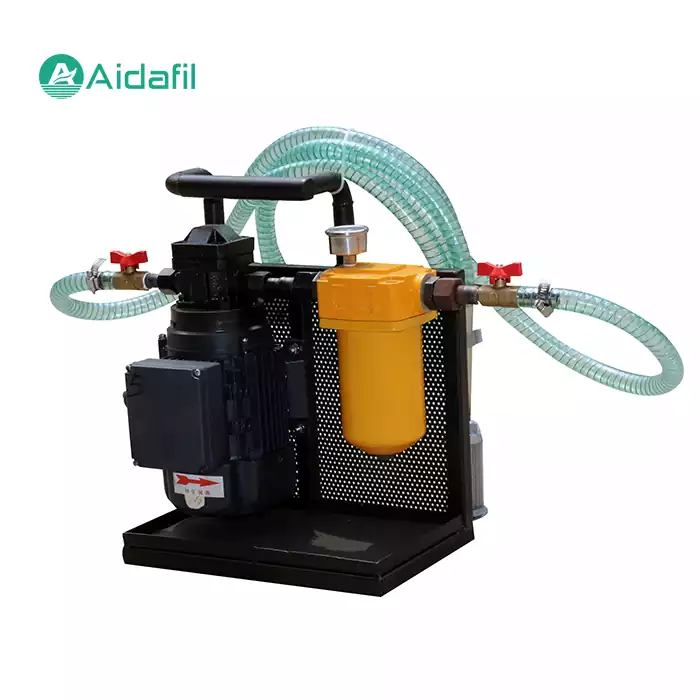
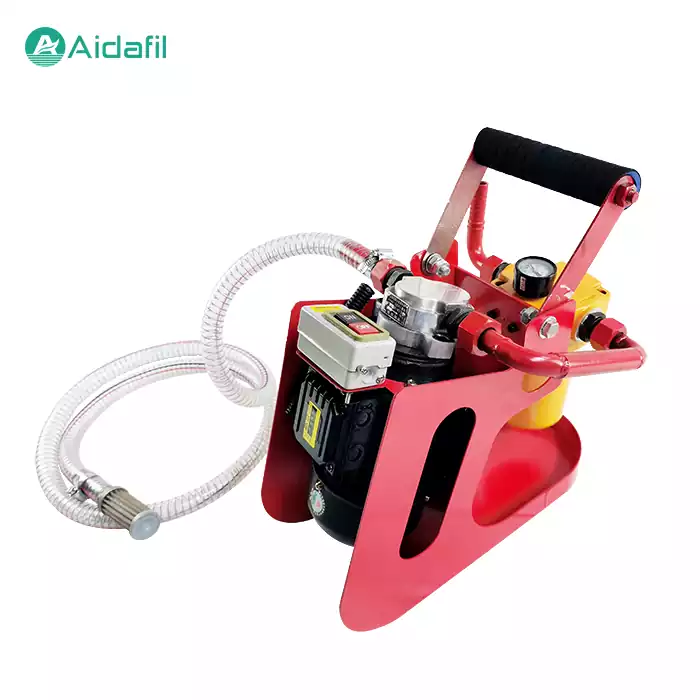
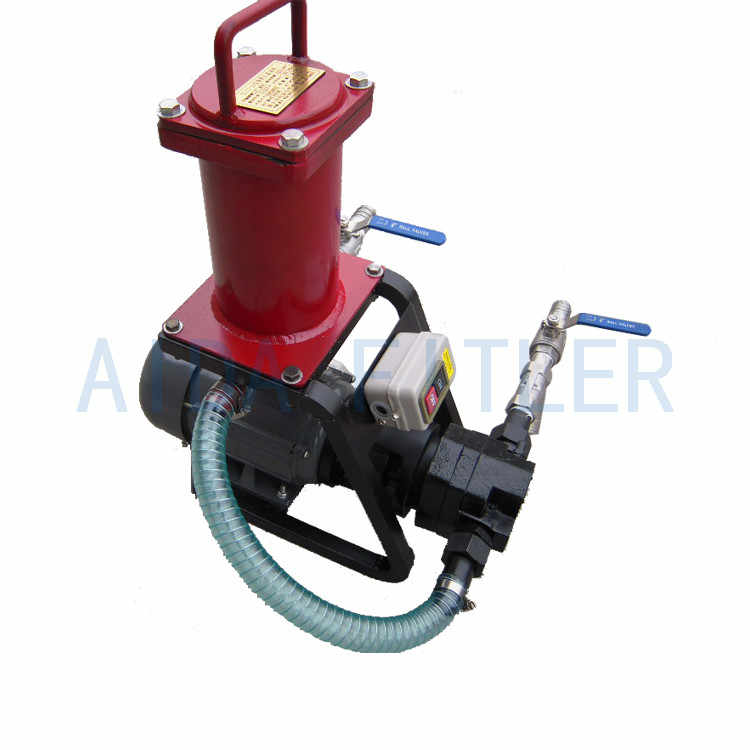
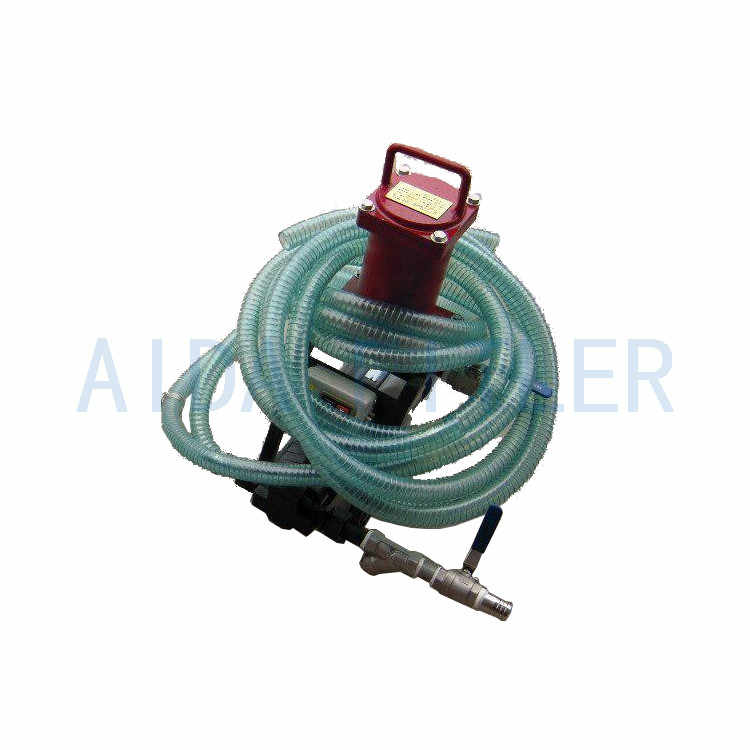
Match a vacuum oil purifier to oil viscosity, water content, flow rate and required cleanliness before requesting a quotation.
Introduction
Oil purification equipment is used to remove water, gas, and particulate contamination from lubricating, hydraulic, transformer, turbine, and other industrial oils. The correct machine size and configuration depend on the oil itself, the contamination present, the required cleanliness level, and the time available for treatment.
A purifier that is too small may not reach the required result within the available maintenance window. A machine that is too large may increase cost and energy use without improving the process. The right selection starts with an oil sample and a clear treatment objective.
This guide explains the main data needed to select an oil purifier, how to think about flow rate and batch time, and which configuration questions should be confirmed before requesting a quotation.
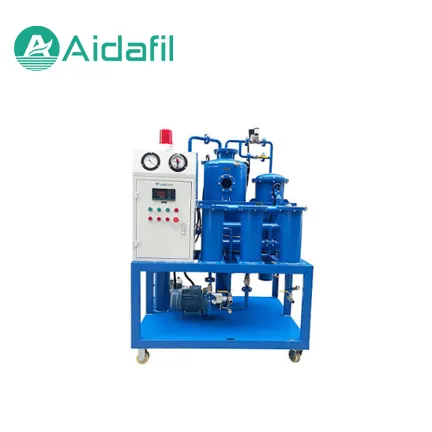
Start With the Oil Type
Different oils have different viscosity, additives, oxidation behavior, and sensitivity to heat. Record the oil's product name, ISO viscosity grade or viscosity at a specified temperature, and the application. Mineral hydraulic oil, compressor oil, turbine oil, transformer oil, and synthetic lubricants may require different treatment conditions.
Do not select equipment using only the oil name. Ask for the technical data sheet and, where possible, a current oil analysis. Confirm the oil's normal operating temperature and the temperature at which it will be processed.
Review the Oil Analysis
An oil analysis helps identify which contaminants need to be removed. Typical results may include water content, particle count, viscosity, acidity, oxidation, flash point, and dielectric strength. For transformer oil, dielectric strength and moisture are especially important.
The treatment target should be stated clearly. Examples include reducing free water, removing dissolved water to a target level, improving particulate cleanliness, or restoring dielectric properties. Different targets may require different vacuum, heating, coalescing, and filtration stages.
If the oil contains a high level of water, emulsified water, or dissolved gas, a simple particulate filter may not be sufficient. Vacuum degassing and dehydration may be needed. If the contamination is mainly particles, a suitable filtration stage may be the primary requirement.
Calculate the Required Flow Rate
Flow rate is not only the machine's nominal capacity. It must be considered together with the volume of oil to be treated and the available processing time.
A practical starting calculation is:
Required flow rate = oil volume to be processed ÷ effective processing time
This is only an estimate. The actual result depends on the initial contamination, target cleanliness, oil viscosity, temperature, vacuum performance, and the number of passes required. For critical equipment, the manufacturer or process engineer should confirm the treatment time.
Consider whether the purifier will operate continuously while the equipment is running or as a batch process during a shutdown. A continuous bypass installation may require a lower flow rate than a batch treatment that must finish within a short maintenance window.
Select the Treatment Stages
An oil purifier may combine several stages:
Coarse filtration for large particles
Heating to reduce viscosity and support dehydration
Vacuum dehydration and degassing
Coalescing or separation for free water
Fine filtration for particulate removal
Optional polishing or adsorption stages
The stages should be selected according to the oil condition and the required result. Adding a stage that is not needed increases complexity and cost. Removing a necessary stage may prevent the machine from reaching the target.
Consider Oil Viscosity and Temperature
Higher-viscosity oil is more difficult to pump and process. Heating may be required, but the maximum temperature must remain within the oil and system limits. Confirm the heater capacity, temperature control, and safety interlocks.
Check the oil's flash point and the supplier's recommended processing temperature. Do not assume that higher temperature always produces a better result. Excessive heat can accelerate oxidation or degrade additives.
Check the Configuration and Installation Requirements
The machine should suit the available space, connections, power supply, and maintenance access. Consider:
Inlet and outlet connection sizes
Mobile or stationary configuration
Flow and pressure requirements
Heater and vacuum pump power
Local voltage and frequency
Required protection for the operating environment
Availability of hoses, valves, and sampling points
Waste-water or gas handling
Operator training and maintenance access
If the purifier will be used in a hazardous area, confirm the required electrical protection with the site engineer. Do not select a standard configuration without reviewing the installation environment.
Define the Acceptance Check
Before delivery or after commissioning, define how performance will be checked. A practical acceptance process may include:
28.Record the initial oil analysis.
29.Record the volume and temperature of the oil.
30.Run the agreed treatment cycle.
31.Sample the oil after the cycle.
32.Compare the result with the agreed target.
33.Record flow, vacuum, temperature, and pressure.
34.Confirm that no leaks or abnormal noise are present.
The test should use representative oil and realistic operating conditions. A bench test with clean oil does not prove that the machine will remove water or gas from the actual process oil.
Common Selection Mistakes
One common mistake is selecting by tank volume alone without considering the required cleanliness and available time. Another is assuming that a particulate filter will remove dissolved water. Some buyers compare only nominal flow rates and ignore viscosity, vacuum, and temperature.
Another risk is treating transformer oil with a machine that is not configured for the required dielectric performance. For critical oils, the treatment target and acceptance test should be agreed before purchase.