Three-dimensional pore network
Overlapping fibers create connected pores and a large internal surface, supporting depth filtration and catalyst-contact applications.
Sintered nickel fiber media
A porous, nonwoven metal-fiber material for demanding filtration, catalyst support, gas diffusion and engineered flow applications. AIDA supports material selection, custom fabrication and quotation from one technical brief.
Product grade, dimensions and performance are confirmed against the actual operating conditions. This page is a selection guide, not a universal specification.
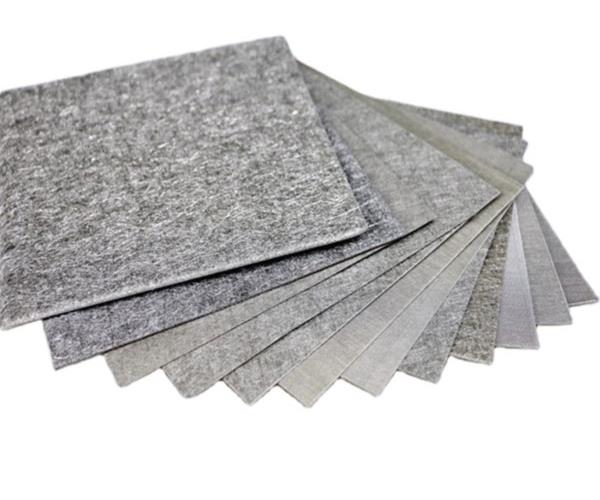
Material overview
Nickel felt is a nonwoven porous metal material made from fine nickel fibers. The fibers are dispersed into a mat, laid into a uniform web and bonded through a high-temperature sintering process.
The result is an open, three-dimensional fiber network with a large accessible surface area and connected pore channels. It differs from woven wire mesh, perforated plate and nickel foam because the material combines depth filtration with a continuous metal structure that can be fabricated into finished components.
For filtration projects, the most important variables are fiber diameter, pore structure, thickness, porosity, permeability and the required cleanliness or chemical compatibility. These variables interact: a change that improves flow may reduce particle retention or mechanical support, so the grade should be selected as a system rather than by one number alone.
Illustration only. Pore geometry, fiber diameter and surface finish are specified per grade.
Engineering characteristics
Nickel felt is chosen when a porous material needs to combine permeability, surface area, thermal stability and a durable metallic structure.
Overlapping fibers create connected pores and a large internal surface, supporting depth filtration and catalyst-contact applications.
High porosity supports flow with a low solid fraction. The exact balance between flow and retention depends on fiber and pore design.
Nickel is suitable for many elevated-temperature and chemically demanding projects, subject to atmosphere and media compatibility.
Nickel felt can be reviewed for cutting, forming, welding and support-layer integration as a disc, ring, tube, cup or assembly.
The metallic fiber network provides electrical and thermal pathways that may suit electrode, diffusion or heat-transfer projects.
Where the contaminant and process permit, sintered metal fiber media can be considered for backflushing or other cleaning cycles.
Application map
Final suitability is confirmed from the medium, operating conditions, required cleanliness and component geometry.
Filtration of oils, fuels, refrigerants, polymer melts, process liquids and suspensions where metal media and cleanability are preferred.
Discuss the duty →Particle retention in hot gas streams, subject to oxidation behaviour, contaminant chemistry, differential pressure and support design.
Check selection factors →A porous, high-surface-area carrier for catalyst systems where metallic structure, thermal conductivity and formability are useful.
Explore porous metal media →Porous nickel felt can be evaluated for fuel-cell, electrolyser and electrochemical components with project-specific validation.
Read application notes →Sintered fiber media can support melt filtration and flow distribution where thermal resistance and a rigid porous structure are required.
View metal filter products →Discs, rings, cups, tubes and support laminates can be engineered around an existing housing or equipment interface.
Browse the catalog →Selection guide
A suitable grade balances particle retention, pressure drop, mechanical support, chemical compatibility and service life.
| Variable | What to define | Why it matters |
|---|---|---|
| Filtration rating | Nominal or absolute target, particle size distribution and required efficiency | Sets the relationship between capture performance and pressure drop |
| Fiber diameter | Available range or target pore structure | Influences pore size, surface area, strength and permeability |
| Thickness | Finished thickness, tolerance and support method | Affects dirt-holding capacity, flow path and mechanical stability |
| Porosity and permeability | Flow rate, allowable pressure drop and fluid viscosity | Determines whether the design can meet the hydraulic requirement |
| Operating conditions | Continuous temperature, peaks, pressure, cycling and atmosphere | Drives grade selection, housing design and service-life validation |
| Chemical compatibility | Fluid or gas composition, concentration, contaminants and cleaning chemicals | Prevents unexpected corrosion or contamination of the process |
| Form and interface | Sheet, disc, ring, tube, cup, drawing, edge treatment and tolerances | Ensures the media fits the housing and can be sealed without bypass |
| Cleaning method | Backflush, ultrasonic, chemical clean, disposable or replacement interval | Influences support structure, pore design and total operating cost |
Material comparison
| Consideration | Nickel fiber felt | Nickel foam | Woven metal mesh |
|---|---|---|---|
| Structure | Nonwoven, sintered fiber web | Open-cell cellular foam | Regular woven wire pattern |
| Pore character | Tortuous depth-filtration paths | Large connected cells | Controlled openings between wires |
| Surface area | High accessible fiber surface | High, but pore geometry differs | Lower surface area |
| Typical emphasis | Filtration, support, diffusion and electrode media | Lightweight porous structures and electrodes | Surface screening and support |
| Selection question | Which pore, flow and thickness balance is required? | Which cell size and compression behaviour are required? | Which aperture and weave provide the required screening? |
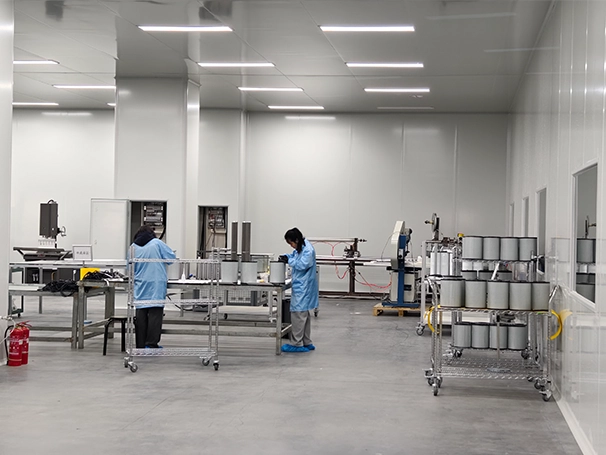
Supply and verification
Nickel felt is often only one layer of the final product. A reliable component also needs correct dimensions, edge treatment, support, sealing and a clear inspection plan.
Installation and maintenance
Most media problems come from bypass, mechanical damage, incompatible cleaning or an unrecognised change in the process.
Confirm flow direction, seating, support and compression. Inspect seals and surfaces before closing the housing.
Record the clean starting pressure drop and trend it against flow and temperature. A sudden change deserves investigation.
Do not assume every backflush or chemical clean is compatible. Confirm with the media, contaminant and housing materials.
Use pressure-drop limits, inspection findings or the maintenance schedule rather than an arbitrary interval.
Related AIDA resources
Frequently asked questions
Use these answers as a starting point. A quotation recommendation still depends on the medium, equipment interface and operating conditions.
Ask a technical question →Nickel felt is a porous nonwoven media made from nickel fibers. The fibers are laid into a uniform web and sintered so that their contact points bond into an open, three-dimensional structure.
No. Nickel felt uses a nonwoven metal-fiber structure, while nickel foam has a cellular, foam-like pore network. Their pore geometry, strength, surface area and flow behaviour differ, so the correct choice depends on the application.
Yes. Sheets, discs, rings, tubes, cups and other fabricated forms can be reviewed. Final dimensions, tolerances, edge treatment and quantity must be confirmed by drawing or application requirements.
The existing AIDA Nickel Fiber Felt range lists nominal filtration ratings from 1 to 100 micrometres. The required rating and test method should be confirmed against the fluid, particles and target efficiency.
Nickel has good thermal stability, but the allowable service temperature depends on the grade, atmosphere, load, pressure differential and thermal cycling. Provide the continuous temperature and peak excursions for a project-specific recommendation.
In many applications, sintered metal-fiber media can be considered for backflushing, ultrasonic cleaning or a suitable chemical procedure. The method must be compatible with the nickel, contaminant, housing and required cleanliness level.
Nickel fiber felt can be considered for gas diffusion, porous transport and electrode-related applications. Conductivity, pore structure, thickness, compression and corrosion behaviour must be validated for the specific stack chemistry and operating conditions.
Please provide the fluid or gas, flow rate, operating pressure and temperature, target filtration rating, dimensions or drawing, quantity, connection or edge requirements, cleaning method and delivery destination.
Request a quotation
Send the operating medium, flow, target filtration rating, temperature, pressure, dimensions or drawing, quantity and delivery destination. Our team will review the requirement and respond with the next technical questions or a quotation.